
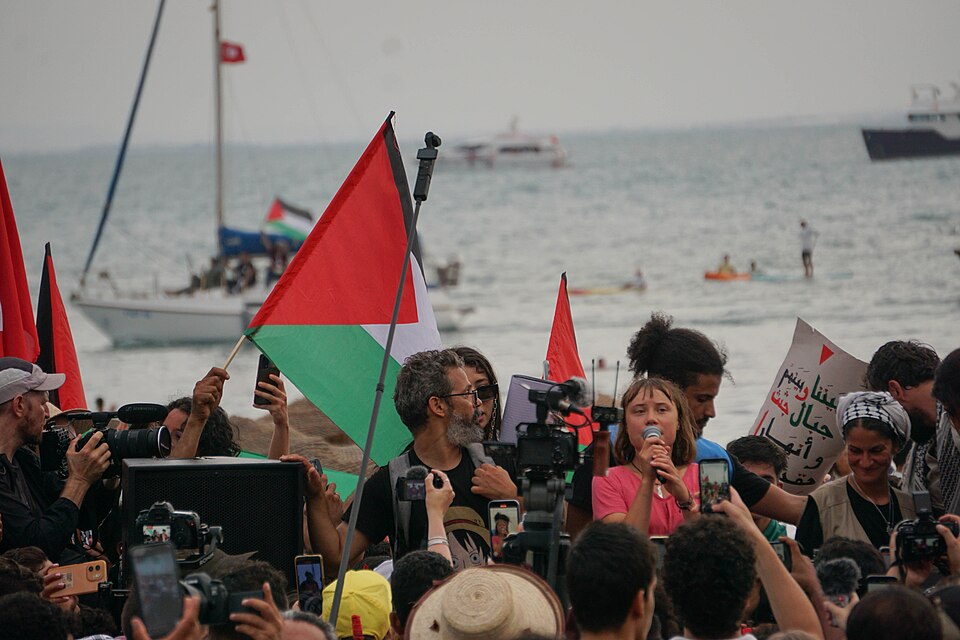

Over the past two years, Israel’s military campaign in Gaza has killed 46,707 Palestinians, including ~18,000 children, and injured many more of its population. landmark report released in September 2025 by the United Nations Independent International Commission of Inquiry concluded that Israeli authorities and security forces committed four of the five genocidal acts defined under the 1948 Genocide Convention. These include mass killings, inflicting serious bodily and mental harm, imposing life-threatening conditions, and preventing births among Palestinians in Gaza.
Despite mounting evidence and international legal obligations, world leaders have largely failed to act. In response, ordinary people, activists, lawmakers, and humanitarians launched a globally coordinated non-violent resistance movement. One of the most visible efforts was the humanitarian mission, the Global Sumud Flotilla, a fleet of 42 boats carrying about 500 participants, including climate activist Greta Thunberg, which set sail to challenge Israel’s blockade on Gaza.
Between 1st and 3rd October, the flotilla was intercepted in international waters by Israeli naval forces. The activists were detained under reportedly inhumane conditions before being released or deported days later. Thunberg, who was among those detained, later said:
There is a genocide going on. Our international systems are betraying Palestinians. They are not even able to prevent the worst war crimes from happening
– Greta Thunberg
Why is a climate activist involved in Palestinian liberation?
Greta Thunberg’s involvement may seem unexpected, but it reflects a deeper understanding of interconnected systems of oppression and exploitation:
- Human Solidarity: Thunberg has consistently emphasized that climate justice is inseparable from human rights. Her activism is rooted in the belief that all people deserve dignity, freedom, and justice, values denied to Palestinians under occupation.
- Platform & Privilege: As a Swedish national with a global following, Thunberg uses her visibility to amplify marginalized voices. Her participation in the flotilla was a deliberate act of solidarity, challenging the silence and complicity of world governments.
- Colonialism & Climate: Climate change is not just an environmental issue. It’s a legacy of colonialism and extractive capitalism. From the dispossession of indigenous people in colonial states such as Australia and New Zealand, to the ongoing occupation of Palestine, these systems exploit land, labour, and life for profit. Thunberg’s stance highlights how environmental degradation and political violence often go hand-in-hand.
A mirror to our own choices
While Palestinians have resisted occupation for decades, many of us have gradually traded our freedoms for convenience and short-term comfort. The question now is not just about Gaza, it’s about all of us.
How do we resist systems that exploit and oppress? How do we reclaim agency to build a dignified life on a liveable planet?
Thunberg’s actions remind us that activism is not confined to one issue. It’s about standing up wherever injustice thrives. Whether through climate strikes or community building, the fight for justice is universal—and urgent.