
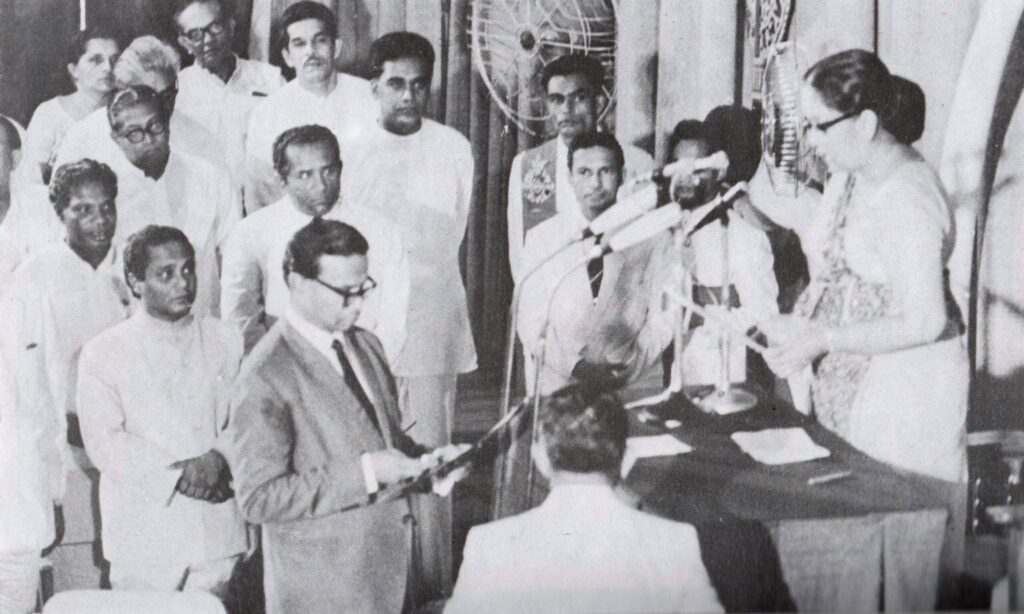
In 1972, Sri Lanka (then Ceylon) adopted a new Republican Constitution, replacing the British-drafted Soulbury Constitution of 1947. This historic change marked the nation’s transition from a Dominion under the British Crown to a fully independent Republic — officially known as the Republic of Sri Lanka.
Interestingly, the drafting didn’t take place in the then Parliament — and the reason behind it is quite fascinating.


The 1972 Constitution of Sri Lanka was drafted by a special body called the Constituent Assembly, which met at the Navarangahala (New Theatre Hall) of Royal College, Colombo.
Key Details
- The Constituent Assembly was convened in July 1970 after the United Front Government (led by Prime Minister Sirimavo Bandaranaike) came to power.
- Dr. Colvin R. de Silva, the Minister of Constitutional Affairs, played a central role as the chief architect of the new constitution.
- After extensive deliberations and committee work, the final document was adopted on 22 May 1972, officially proclaiming the Republic of Sri Lanka.
Why Navarangahala?
The selection of Navarangahala to draft Sri Lanka’s 1972 Constitution was a deliberate and symbolic act. Far from a matter of convenience, it represented the rebirth of the Republic.
Cultural Identity: Built in traditional Sri Lankan style within Royal College Colombo, Navarangahala’s use — instead of the colonial Old Parliament — signified a return to national roots and a break from British influence.
Political Statement: Holding the drafting in a locally built hall embodied sovereignty and self-determination, showcasing Sri Lanka’s intent to chart its own course.
In short, Navarangahala wasn’t just a venue — it was a symbol of independence and cultural pride.
